That clicking sound, the blank screen, or the message saying your drive cannot be read, usually shows up at the most inconvenient time. Family photos, company records, and years of effort can feel like they’re gone in a blink. And before you panic and do something that makes the situation worse, it’s worth knowing that lost files are often recoverable if the drive is treated properly. A lot of people searching for hard drive recovery in Auckland want the same sort of thing: a straight answer, a fair price, and a team that handles your files like it actually matters. At Data Recover, we keep it straightforward, and we walk you through what’s happening—step by step, no vague talk.
What People Usually Get Stuck With When a Drive Starts Failing
Most clients call us after trying a couple fixes on their own. The same worries show up again and again:
- They’re not sure the files can really be saved
- They worry that powering the drive again will make things worse
- They get unclear pricing, because some companies only quote after the work is already done
A failing drive is stressful, and the wrong move, like running random software or opening the casing, can take something recoverable and turn it into a permanent problem. There’s also the privacy concern, since many drives contain customer info, invoices, and sensitive financial details.
The Approach: Pause, then Get a Careful Assessment First
The best move is to stop using the drive and have it assessed properly. At Data Recover, we start by examining the device, then we identify the fault type and explain what is realistically recoverable. You also get a clear quote before we continue, so there aren’t any nasty surprises later. Where possible, we work from a copy, so the original drive isn’t pushed further and your chances of recovery stay as strong as they can.
Why Customers Keep Choosing Us
People pick Data Recover because we are careful, and we’re honest about outcomes. If a drive can’t be saved, we’ll say it plainly, rather than pushing false hope. Our team handles your information confidentially, gives updates promptly, and explains technical issues in plain everyday language. A lot of our clients come through referrals from friends, colleagues, and local IT providers, which is, honestly, one of the best “signs” we can ask for.
What We Give Back to Customers
Every job starts with a clear diagnosis, plus a written quote. We provide regular progress updates, handle your device securely, and include a full list of recovered files—so you can check everything before collection. We also share simple steps to protect your data going forward, like keeping an extra copy of important files, and replacing older drives before they fail completely.
Hard Drive Repair and Recovery: Knowing What Your Drive Actually Needs
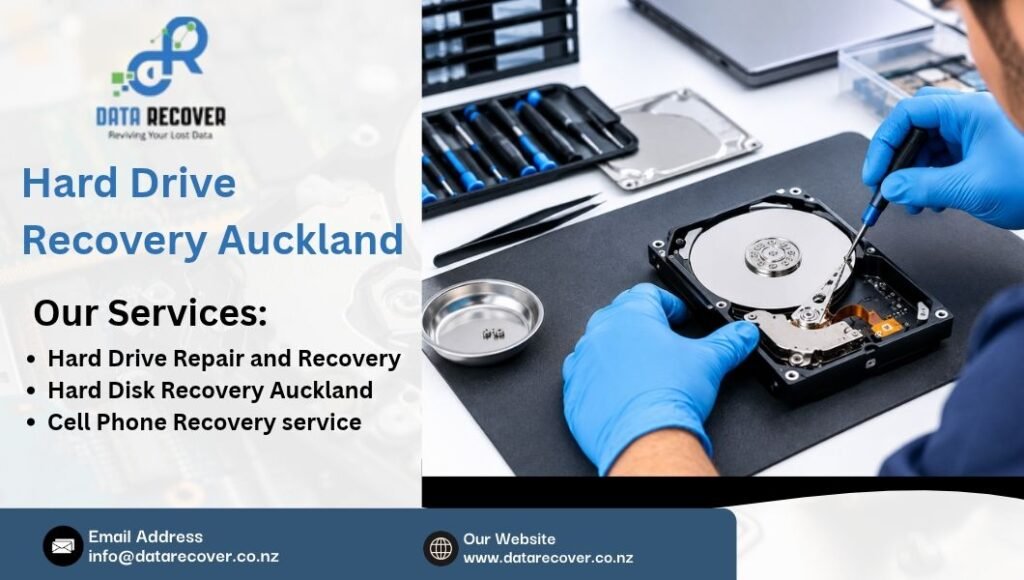
Not every failure looks the same, and understanding the difference can help you choose the right next step. Logical issues—like accidental deletion, corrupted files, or a damaged file system—are usually resolved using specialist software and careful procedure. Physical issues are different: a clicking drive, a burning smell, or a drive that isn’t detected at all often require hard drive repair and recovery in a controlled setting. Turning on a physically damaged drive over and over can scratch the platters and destroy data permanently. If your drive is making unusual noises, was dropped, or has been near water, turn it off immediately and get help. A reputable provider should explain the likely fault, and what that means for cost and recovery success.
Case Study: A Small Business Saves Their Accounting Files
Here’s a practical example of how a typical job can go.
A small Auckland business brought an external drive containing several years of invoices and client records. The drive stopped showing up on their computer, and there was no recent backup. They had already tried two free recovery tools with no success. We assessed the drive, identified a fault in the file structure, and provided a fixed quote the same day. After careful recovery work, we returned the vast majority of their files, along with a complete list for checking. The owner mentioned that the clear communication helped make an otherwise stressful week easier.
Frequently Asked Questions
1. Can all failed hard drives be recovered?
No. Recovery depends on the type, and how extensive the damage is, so an early assessment matters a lot.
2. Should I keep trying to turn the drive on?
No. Repeated attempts can cause additional harm. Shut it off and contact us.
3. How long does recovery take?
It depends on the fault. We give an estimate after we assess the drive.
4. Is my data kept private?
Yes. All customer data is treated as confidential, and used only for the recovery process.
Conclusion
Losing access to your files is upsetting, but it isn’t always the end of the story. If you act quickly, avoid risky DIY steps, and choose a provider that’s open about costs, you improve your chances of getting your data back. Data Recover is ready to assess your drive and guide you through the process.
Contact Us
Need help with a failed drive? Get in touch with Data Recover today.
Email: info@datarecover.co.nz
Website: www.datarecover.co.nz